D Peers at the Teacher Through a Periscope and Is Punished
The Box ManD Peers at the Teacher Through a Periscope and Is Punished is an embedded episode in which a boy’s homemade optical device first makes the world seem welcoming and then enables him to violate a neighbor’s privacy. The gymnastics teacher’s discovery reverses the direction of the gaze: D is made to experience the vulnerability he disregarded, and returns home with a new understanding of his act.
A device for changing the view
D yearns to be strong but does not know how to acquire strength. His response is to build a periscope from plywood, cardboard, and mirrors. Two parallel mirrors, each set at forty-five degrees, carry his eye to the far end of a horizontal or vertical tube; paper hinges and a cord let him alter the angle of the upper mirror. The instrument is a practical invention, but its first importance is psychological: it allows D to look into public space while remaining concealed.
His first trial takes place in a narrow blind spot between an apartment fence and a shed, a hiding place he remembers from childhood games. When he raises the periscope over the fence, the reflected street seems to turn into eyes reproaching him. He ducks, breaks the instrument’s tip against the fence, and repairs it with cellophane tape. The next time, however, he keeps looking. Once he recognizes that the pedestrians cannot see him looking back, his guilt disappears and the scene changes in his perception. Its hostile edges seem softened; the street appears to return his smile. D imagines that he has made peace with the world. What he has gained is not actual control over other people, but a sense of safety produced by looking without being seen.
From observation to intrusion
With that confidence, D moves his experiments from the street to the neighboring cottage of a gymnastics instructor. He has noticed that the cottage stands close to the fence and that its toilet has a low dust-sweeping opening; a vent near the ceiling offers another possible view. He also connects the instructor’s piano practice with the times she might use the bathroom. Rather than establishing what she does or where she lives, he lets the sounds and his own expectations form a private scenario. The periscope that had made ordinary surroundings seem harmless now serves a deliberate attempt to look into a private room.
D chooses the afternoon because his father will be away and his mother may be out shopping. He delays her errand with an excuse, waits for the instructor’s familiar final piece to begin, and slips into the narrow space between the cottage and fence. The dust opening is ajar, so he positions the periscope horizontally. He can see the toilet, but his view does not deliver the scene he has anticipated. As the music continues, he grows increasingly agitated and preoccupied with what might happen next. The episode’s suspense rests on the gap between his imagined access and what the instrument actually reveals: he has organized his movements around a fantasy of observation, without securing the control he assumes the device gives him.
Discovery and reversal
A voice suddenly addresses D at close range and orders him not to run. The speaker tells him to go around to the entrance and come inside. D cannot tell how he has been seen, and the periscope that made him feel protected has not prevented his discovery. He considers fleeing, but interprets the warning as a chance to avoid a report to his school or parents. Carrying the now useless instrument, he obeys and enters the cottage.
Inside, the instructor receives him in the music room. The sound-absorbing walls and piano place him in the space whose music he had used to plan his spying; the instructor has evidently finished using the toilet after discovering him. She locks the front door and asks whether he is ashamed. D admits that he is. She then explains that she will not let him go entirely unpunished and will make him experience the feelings he caused her. Her response is framed as a deliberate reversal: the hidden observer is no longer protected by an apparatus or by distance, but exposed to another person’s attention and judgment.
The punishment and its meaning
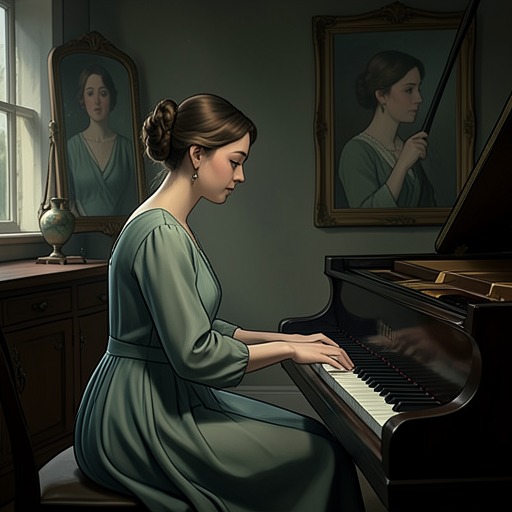
The instructor plays the piece D has heard through the wall, identifying it as Chopin. In the room, the music is no longer a muffled clue with which he calculates when to spy; it is an encounter he must endure in her presence. She then orders him to take off his clothes while she waits in the adjoining room, and warns that she is watching through the keyhole. D hesitates, but obeys. The account emphasizes his shame and fear rather than treating the episode as a successful or reciprocal intimacy. His response is involuntary, and he collapses in distress; the teacher’s demand is presented as punishment, not consent or affection.
When she asks whether he understands, D nods. She sends him home and throws him the key to the front door. The ending gives no account of a later report or further consequence. Its resolution is instead the recognition D reaches in the moment: being watched and exposed feels different from the imagined, one-sided power of watching. The periscope has not simply failed as a tool; its promise of immunity has collapsed. The teacher’s retaliation makes the relation between observer and observed the center of the episode, while the repeated piano piece links D’s private anticipation to the real person whose privacy he violated.
Narrative role
Presented as the Case of D within the book’s account of box-man life, the episode extends its concern with concealment, visibility, and the unequal powers of looking. D’s periscope resembles an improvised means of securing a protected viewpoint: like a box’s observation window, it enables sight while obscuring the observer. Yet the scene refuses to let invisibility count as innocence. D’s confidence depends on believing that the world cannot look back; once the teacher finds him, the device no longer guarantees distance or mastery.
The episode also distinguishes looking at a public street from invading a neighbor’s private space. At first, the periscope alters D’s sense of his relationship with the world, making the scene seem gentle and accepting. He then mistakes that feeling of safety for permission to spy. The teacher’s response forces him into the position he had disregarded, converting his instrument of concealment into the sign of his failed control. His return home closes the incident, but its lasting point is the reversal itself: an observer who assumes himself unseen can still be discovered, and the gaze he directs outward can return as exposure.